Harmattan Laundry Tips for Lagos: Dust, Dry Air, Damp
Every year the dry season brings a familiar set of problems, and good harmattan laundry tips can make the difference between a stress-free wardrobe and a house full of dusty, scratchy, slightly damp clothes. The harmattan wind carries fine dust from the Sahara, and even in Lagos you notice it: a film on the car, a haze over the lagoon, a layer on the window ledge, and a coating on the clothes you hung out to dry.
This guide explains what the harmattan season does to your laundry, and what you can do about it. It covers dust, dry skin, static, wet-looking laundry that never feels quite dry, and the bulky items that quietly collect dust, such as duvets, curtains and rugs. It is written for ordinary households in Lekki and across Lagos, using methods that need nothing special.
What harmattan does to your laundry
Harmattan affects clothes in three main ways. Knowing which one you are dealing with makes it easier to fix.
Dust settles on everything
Fine dust gets into clothes hanging on a line, folded in an open wardrobe, or sitting on a chair. It makes white clothes look dull, dark clothes look chalky, and fabrics feel gritty. Dust on clothes in Lagos is not only an outdoor problem, because it enters through windows and louvres and settles on indoor surfaces too.
The air is drier, so skin and fabric both react
Dry air makes skin tighter, itchier and more sensitive. It also makes certain fabrics cling and crackle. Many people notice more static in synthetic clothing during this season, and more irritation from rough or scratchy fabrics, or from detergent left in the cloth.
Laundry can still end up damp
This one surprises people. Clothes usually dry faster in dry air, but there are traps. Thick items such as hoodies, jeans, towels and duvets can feel dry on the outside while staying damp inside. Cool early mornings and evenings can leave air moist at times. If laundry is folded away before it is completely dry, it can turn musty in a closed wardrobe. Lagos is also coastal, so humidity does not vanish the moment the dry season arrives.
Harmattan laundry tips: how to wash clothes
Rinse thoroughly
Detergent that stays in the fabric can irritate dry, sensitive skin. Add an extra rinse for underwear, baby clothes, bedsheets and anything that touches your skin for long hours. If your skin is itchy during harmattan, leftover soap is a common and easily fixed cause.
Use less detergent, not more
More detergent does not mean cleaner clothes. Use the amount recommended on the pack, and use less for small or lightly worn loads. A fragrance-free or mild detergent can be gentler on dry skin.
Be careful with fabric softener
Softener can reduce static and make clothes feel softer, but too much can leave a coating that affects absorbency, especially on towels. A little goes a long way. If you are sensitive to fragrances, choose a mild option or skip it for items that sit close to your skin.
Shake before you hang
Give each wet item a firm shake before you hang it. It loosens creases and helps it dry evenly. It also helps clothes feel softer once dry.
Wash dusty clothes sooner
If something has been sitting in the open for a while and looks dusty, shake it outside first, then wash. Putting very dusty clothes straight into the machine just turns the dust into muddy water that settles on other items.
Drying clothes in harmattan: fast, but dusty
The wind and dry air can dry clothes quickly outdoors, and that is a real advantage. The challenge is that dust blows onto wet fabric and sticks to it. Here is how to get the best of both.
- Dry in a sheltered space. A balcony, veranda or covered line gets the airflow without so much direct dust.
- Dry early in the day. Hang clothes out once the sun is up, and bring them in as soon as they are dry. Leaving clothes out all day gives dust more time to settle.
- Wipe the line first. A dusty line or hanger transfers dirt to wet clothes. A quick wipe helps.
- Turn dark clothes inside out. It limits chalky marks on the surface.
- Shake each item when you take it down. This clears dust that landed on the fabric while it dried.
- Check thick items. Press the seams, pockets, waistbands and the centre of towels and hoodies. These areas stay damp longest.
- Do not rush to fold. Let clothes cool and finish drying for a short while before they go into drawers and wardrobes.
Fabrics that are kinder to dry skin
When the air is dry, the clothes closest to your skin matter more. You do not have to change your whole wardrobe, but a few choices help.
- Soft, breathable fabrics such as cotton are usually comfortable against dry skin.
- Rough or scratchy materials can irritate, so wear a soft layer underneath.
- Tight synthetic clothes can feel hot and increase static for some people.
- Loose fits reduce friction on dry or cracked skin.
- Fresh bedding matters, because we spend many hours on it each night.
If you have eczema or a skin condition that flares in the dry season, speak to a doctor about care, and ask about which detergents are suitable for you. We can wash your clothes, but we are not able to give medical advice.
Body creams, shea butter and oil stains on clothes
Harmattan means lotion, shea butter, petroleum jelly, body oil and lip balm. Those products love to travel from your skin onto your clothes, especially around collars, cuffs, sleeves and the neckline of dresses and tops.
Oil-based marks can look faint when fresh, then darken as the fabric ages. Here is how to reduce the problem.
- Let creams and oils sink into your skin for a few minutes before you dress, particularly if you are wearing light colours or delicate fabric.
- Wipe your hands before touching a good outfit.
- Treat any visible greasy mark soon, rather than leaving it in the laundry basket for days.
- For delicate or expensive outfits, such as lace, silk or native wear, have the marks professionally treated rather than scrubbing them yourself.
Bedding, duvets, curtains and rugs: the dust collectors
When people think of laundry, they think of shirts. In harmattan, the biggest dust collectors are often the large soft items in your home.
Bedding and duvets
Dust settles on bedsheets, pillowcases and duvets, and dry skin sheds more. Fresh bedding can make nights more comfortable. Our guide on how often to wash bedding, duvets and pillows goes into more detail. Duvets are bulky and slow to dry at home, so many people choose to send them out.
Curtains
Curtains catch dust all season. If they look dull or make you sneeze when you pull them, they probably need cleaning. Take them down carefully, and check the care label before you wash.
Rugs and carpets
Rugs hold dust deep in the pile. Vacuum both sides, and consider a deep clean at the end of the dusty season. Our rug and carpet cleaning page explains how rug pickup works and how rugs are priced.
Trainers and shoes
Dusty roads mean dusty shoes. Wipe them down regularly, and let them dry away from direct heat.
Keeping white clothes white in dusty weather
White clothes show dust more than any other colour. Wash them separately, rinse well, and dry them away from dust where possible. For more ideas, read our article on how to keep white clothes white in Lagos weather.
Storing clothes during the dusty season
- Keep wardrobes closed. Open shelves collect dust fast.
- Use breathable garment covers for suits and good outfits. Avoid sealing damp clothes in plastic.
- Do not store anything damp. Make sure everything is fully dry before you put it away.
- Wipe shelves before you restock them.
- Brush and air items that you want to wear again before they go back.
- Keep native wear and occasion outfits away from dust, because the season often overlaps with weddings and year-end events.
When to send your laundry out
Harmattan makes laundry heavier on your time and your energy. You are not expected to handle all of it yourself. These are good moments to send things out:
- Duvets, blankets, curtains and rugs that are too bulky to wash and dry at home.
- Suits, gowns, lace and native wear that need dry cleaning before an event.
- A big pile of dusty clothes after a busy week.
- Any period when you simply do not have time to wash and dry everything.
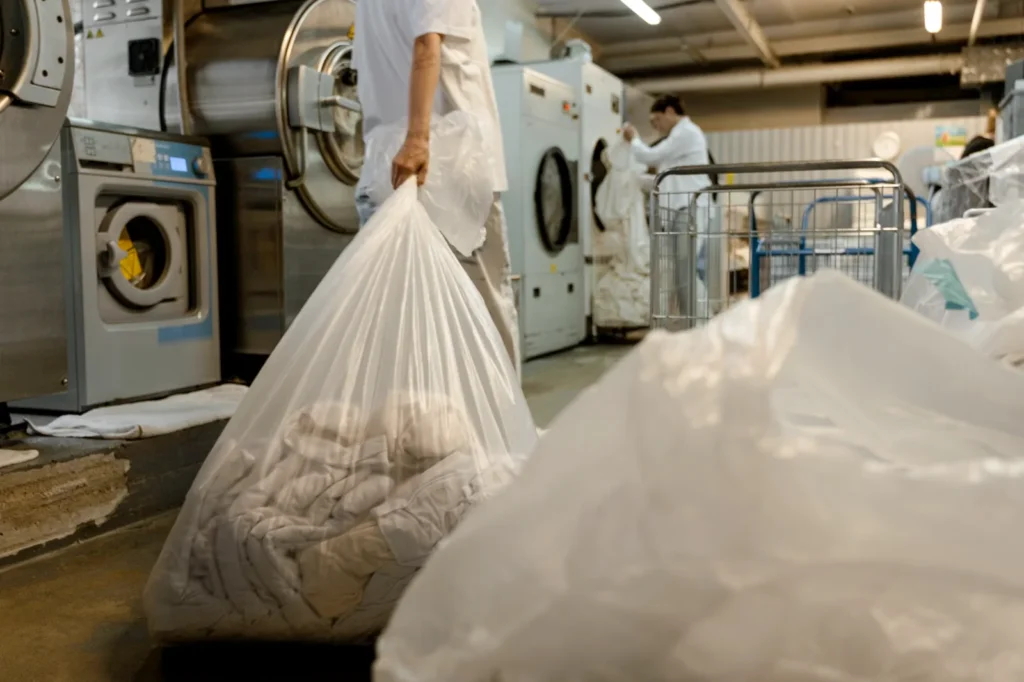
At WashAmClean, you can book a pickup from Lekki, Ajah, Victoria Island, Ikoyi or Oniru. You choose a day and a time window, and we collect from your door. Items are sorted by colour, washed, dried, folded and packed, and each order gets a quality check before delivery or collection. Items can also be dry cleaned. Our services page lists what we offer, and you can follow your order on the tracking page.
There is no delivery fee and no minimum order. We do not publish a fixed turnaround time, because it depends on what you send, so ask us when you book.
A quick harmattan laundry routine
- Shake dusty clothes before washing.
- Rinse well and use only as much detergent as you need.
- Dry in a sheltered, airy place and bring clothes in as soon as they are dry.
- Check thick items for hidden damp before folding.
- Keep wardrobes closed and clothes covered.
- Wash bedding on a regular schedule.
- Send out large or delicate items.
Frequently asked questions
Why do my clothes feel gritty after drying outside?
Harmattan dust blows onto wet fabric and sticks as it dries. Dry clothes in a sheltered place, bring them in early, and shake each item before folding.
Why do my clothes feel damp even though it is dry weather?
Thick items dry from the outside in, so the inside can stay damp. Check seams, pockets, towels and hoodies before you fold them, and give them extra time if needed.
Can washing clothes help with itchy dry skin?
Leftover detergent can irritate sensitive skin, so a thorough rinse and a mild detergent can help. For medical skin conditions, speak to a doctor.
Does WashAmClean wash duvets and curtains?
Yes. We handle duvets and bedding, and curtains are listed on our services page. Check our services page for details and current prices.
How do I book a pickup?
You can book on our website, order on WhatsApp or chat with Wami. No account is needed. Choose your area, day and time window, and we will confirm the pickup time with you.
Tired of dust on everything? Book a pickup and let us take the laundry off your hands this season.