How to wash and care for agbada, kaftan and native wear
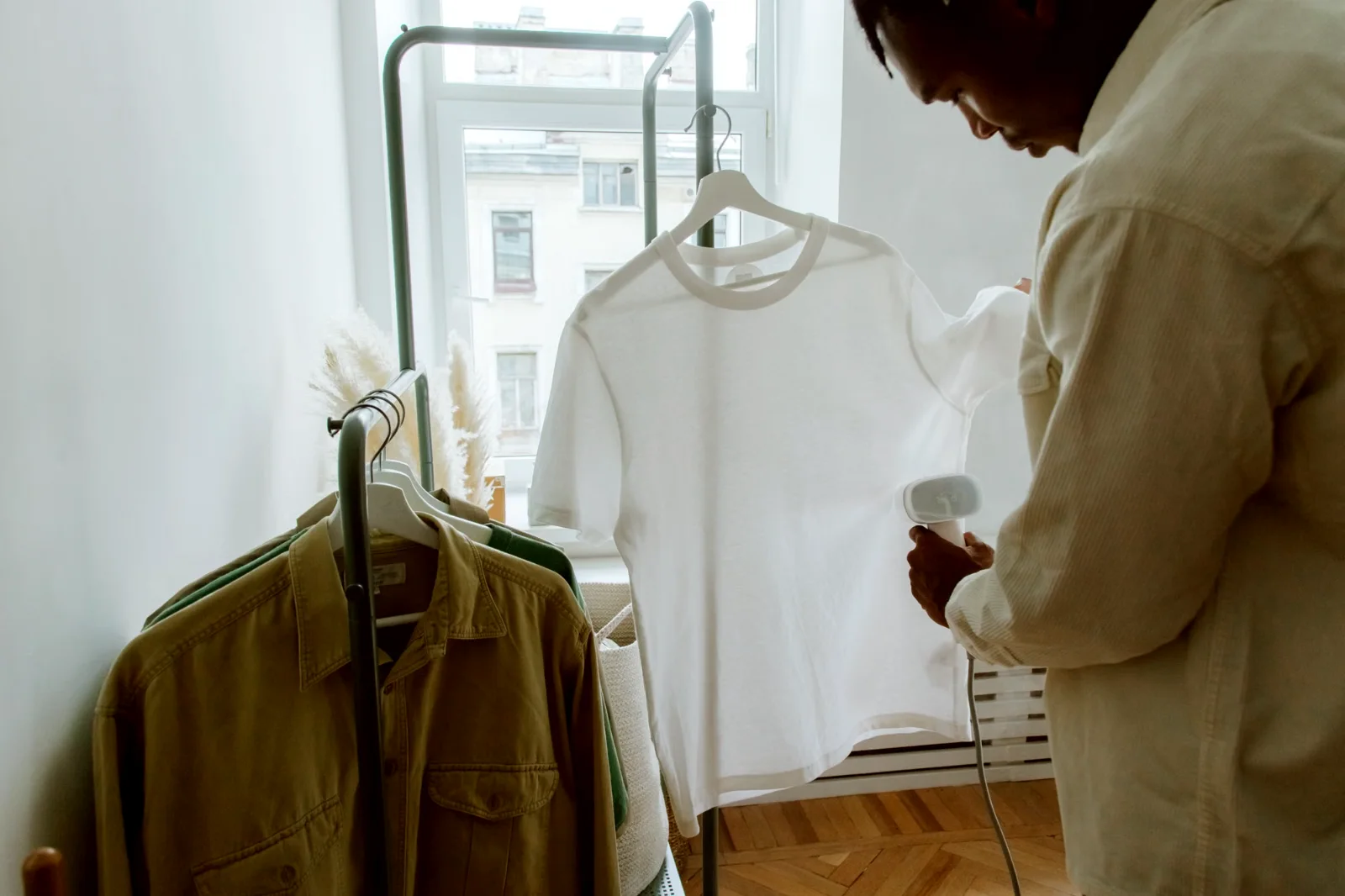
Your agbada for a wedding, the kaftan you wear every Friday, the iro and buba you saved for a special owambe: native wear carries memories, and it usually costs more than everyday clothes. It also comes in fabrics that behave very differently in water.
Here is how to keep it looking sharp for years, and when it is safer to hand it over.
Start with the fabric and the label
Before anything touches water, check two things.
The care label. Many tailored outfits have no label at all, but ready-made pieces often do. A washtub with a hand in it means hand wash only, at no more than 40°C. A washtub with a cross through it means the item should not be washed at home. A circle means professional cleaning: a P or F inside means dry clean, a W means professional wet cleaning, and a crossed-out circle means do not dry clean.
The fabric. If there is no label, the fabric tells you most of what you need to know.
| Fabric | Common in | Best approach |
|---|---|---|
| Senator / suiting blends | Kaftans, senator sets | Gentle hand or machine wash, cool water |
| Cotton “guinea” and brocade | Agbada, buba | Hand wash cool, iron while slightly damp |
| Ankara (wax print) | Iro and buba, shirts | Cold wash inside out to protect the print |
| Lace and voile | Iro and buba, gowns | Very gentle hand wash or dry clean |
| Aso oke | Agbada, gele, wrappers | Dry clean; heavy hand-woven cloth can lose shape in water |
| Anything with stones, beads or heavy embroidery | Wedding and party wear | Dry clean |
If you are unsure, treat the garment as delicate. You can always clean more firmly next time; you cannot undo shrinkage or a run of colour.
How to wash native wear at home
For cottons, senator fabrics and Ankara that can be washed:
- Test for colour run. Dampen a hidden seam with a little detergent and press it with a white cloth. If colour comes off, wash it on its own or send it for dry cleaning.
- Wash it inside out. This protects embroidery, prints and the face of the fabric.
- Use cool water and a mild detergent. Hot water fades rich colours and can shrink cotton. Add the detergent to the water before the garment goes in.
- Wash the pieces separately. Agbada, buba and sokoto can bleed onto each other, especially when they are different colours.
- Don’t wring or twist. Press the water out gently or roll the garment in a clean towel.
- For stains, act early. Rinse fresh stains with cold water from the back of the fabric, then work a little liquid detergent in before washing. Always test any stain remover on a hidden spot first.
Machine washing
A machine is fine for sturdier senator and cotton pieces: use a gentle or hand-wash cycle, cold water, a low spin, and a mesh laundry bag for anything with embroidery. Keep agbada and anything with stones out of the machine.
Drying without fading
Lagos sun is free bleach, which is lovely for white towels but hard on deep blues, wines and greens. Sunlight fades coloured fabrics, so:
- Dry coloured native wear inside out, in the shade or indoors with good airflow.
- Hang agbada and long kaftans on a wide, padded hanger, or lay them flat, so the weight of wet fabric doesn’t stretch the shoulders.
- Take things in as soon as they are dry. Leaving them out for hours adds fading and dust.
Ironing embroidery the right way
Crisp native wear is half the outfit. To get there without shine marks or flattened embroidery:
- Iron while slightly damp, or use steam. Cotton and brocade press far better this way.
- Iron on the reverse side, especially over embroidery. Lay the embroidered area face down on a thick towel so the pattern keeps its raised shape.
- Use a pressing cloth (a clean cotton cloth) between the iron and dark or shiny fabrics to avoid shine.
- Match the heat to the fabric. Lace and synthetic blends need a low setting; cotton can take more.
- Starch gives structure. A light spray or cold starch helps agbada and buba hold their shape.
Storing native wear between occasions
- Make sure everything is completely dry before it goes away. Damp cloth in a humid wardrobe invites mildew.
- Store in a breathable cotton garment bag, not plastic, which traps moisture.
- Keep aso oke and heavier pieces folded with tissue paper or hung on padded hangers, away from direct light.
- Air pieces out every few weeks during the rainy season.
When to send it to a professional
Some pieces are not worth the risk at home: aso oke, lace with stones, beaded or heavily embroidered wedding outfits, anything with a “do not wash” label, and anything with a stain you have already tried and failed to remove.
At WashAmClean we dry clean native wear and press it carefully. Prices as of 15 October 2026 include:
| Item | Price | Express |
|---|---|---|
| Agbada (complete), dry clean | ₦8,500 | ₦12,750 |
| Kaftan / native, dry clean | ₦5,500 | ₦8,250 |
| Aso oke (complete), dry clean | ₦7,000 | ₦10,500 |
| Iro & buba (lace), dry clean | ₦5,500 | ₦8,250 |
| Iro & buba (Ankara), dry clean | ₦4,000 | ₦6,000 |
| Agbada, ironing only | ₦1,000 | ₦1,500 |
See the full list on our dry cleaning page or services and prices.
Let us take it off your hands
If your agbada needs to look its best for Saturday, you don’t have to spend Friday night over a bucket. We pick up from Lekki, Ajah, Victoria Island, Ikoyi and Oniru, or you can bring it to our shop at Zonta Plaza, 8 Kusenla Road, Ikate-Elegushi. Book a pickup and choose a time that suits you.